
Safety on campus with Matt Talbot
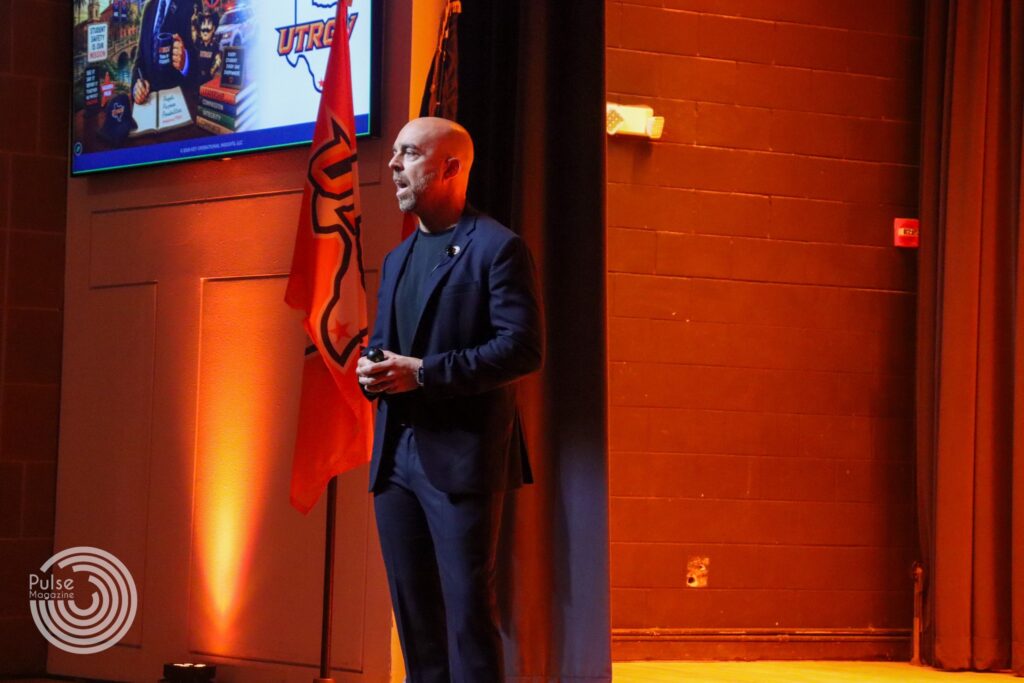
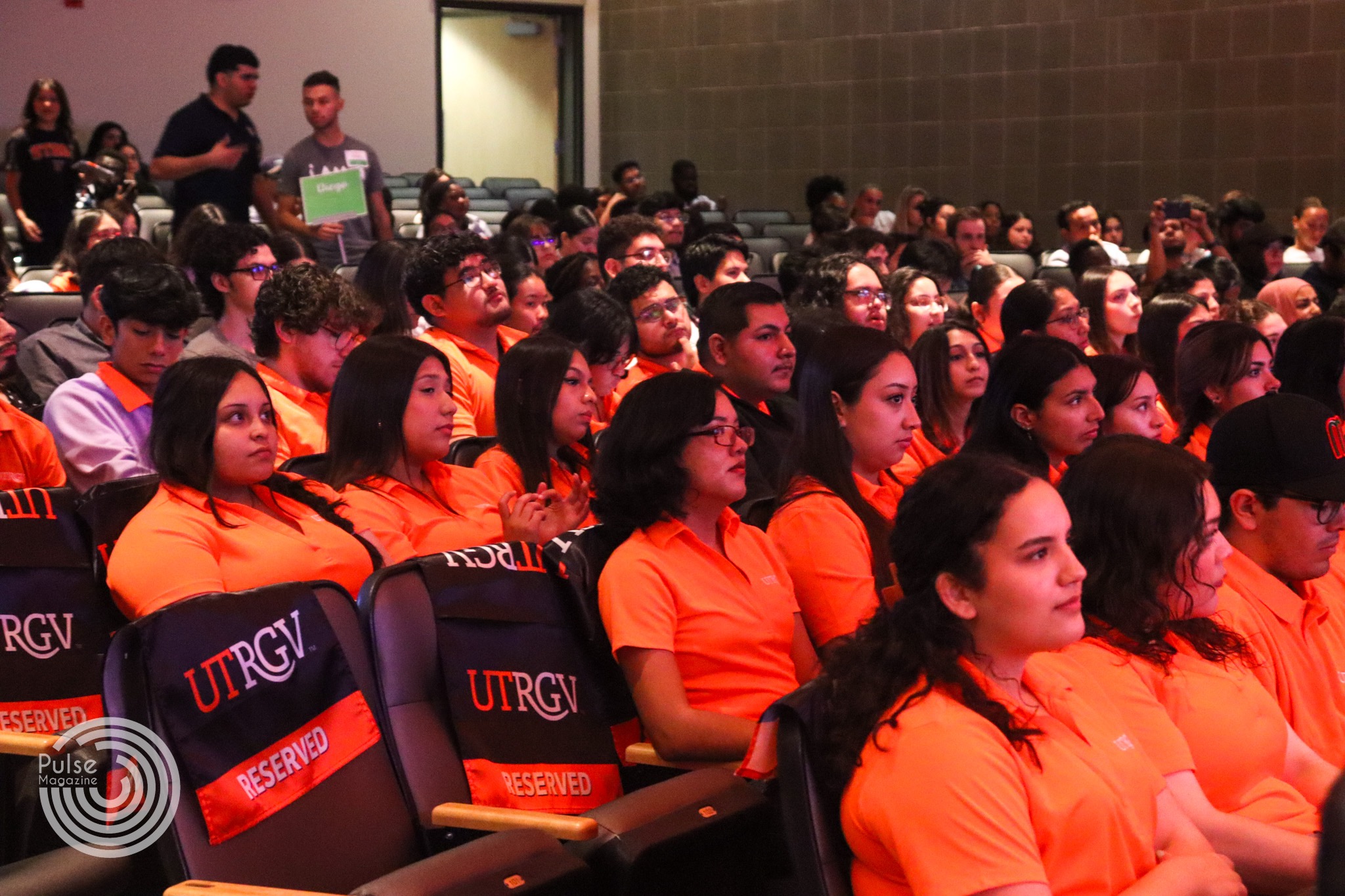
UTRGV Deans of Students hosted a safety training for student leaders on Aug. 25 at the Student Union PlainsCapital Bank Theater on the Edinburg campus. The training was centered around looking for warning signs to prevent school shootings, suicide and how to escape an abusive relationship.
The event went over the warning signs students might exhibit in different situations.
Co-founder and principal consultant for Key Operational Insights(K.O.I), Matt Talbot, was the keynote speaker.
Talbot spoke about techniques like “Leakage,” which consist of not only looking at people’s physical and mental state, but also how they present themself on social media and identifying any characteristics that might not be normal.
Although the event was catered to student leaders, the event was for all vaqueros. Ismael Amaya, dean of students, said whether they may be a student leader, student employee or just a student, this is something they will find useful and practical.
“Some of the key takeaways were that everybody plays a role in ensuring the safety of the community,” Amaya said.
The presentation allowed students to know when to question odd behaviors to prevent dangerous situations.
Ingrid Gonzalez, an international business senior, said she thought the event was great and the speaker was qualified on the topic.
Luis Ocana/Pulse
“It was a really great resource for students since it’s situations we see every day. One thing that stood out for me was that these kinds of events don’t always involve school shootings,” Gonzalez said.
She said it doesn’t have to relate to school; it could also be situations where students have outbursts or are in toxic relationships.
“I think that point was really important to touch on because we see that more prevalent day by day,” Gonzalez said.
Talbot said he wanted to do counseling and therapy work before he got into prevention.
He interned in a House of Corrections in Boston, Massachusetts, where he worked with male and female detainees.
“I was really interested in learning about people who were not like me, people from different backgrounds, different experiences. I didn’t want to learn about another version of myself. I didn’t think it was that interesting,” Talbot said.
He moved to Texas in 2010 and took a job at the Veterans Health Administration. He intended to do emergency room mental health evaluations for crisis scenarios, which he did for about 8 years.
“I fell in love with the opportunity to be in the line of prevention as opposed to response and reaction,” Talbot said.
But after meeting with inmates after their crime, and veterans after their trauma, he wanted to find a way to be more proactive.
“What can we do to help people avoid traumatic experiences or carry out tragedies that we’re seeing on TV all the time with greater frequency over the last 26-27 years,” Talbot said.
Talbot mentions how Columbine, a historical mass shooting in 1999 at Columbine High School in Colorado, became a “watershed” moment.
“Columbine became really significant because it was the first incident that has the amount of media coverage that it did,” Talbot said.
He added that the 100s of hours those same images from Columbine were replayed over and over and were embedded into people’s minds and the culture.
“Those ideas about the black trench coats, heavy metal music and long hair that come from Columbine are still very much alive.”
He also mentions Bruno Diaz, co-founder and co-principal consultant for K.O.I, did research in 2011 that highlighted an increase in self-harm amongst youth and threats.
“The idea is that those things that are more frightening to us will attract more people. People get hooked on it,” Talbot said. “So we see a lot of the impact of social media and how that has impacted people psychologically, but also created avenues for people who may be on the brink of engaging in some concerning or nefarious activity.”
Amaya said one point students took away from the training is students are never truly alone.
“We emphasize that everybody has someone that cares for them and someone that they care for. I think that is the truth,” he said.