
Navigate the spectrum
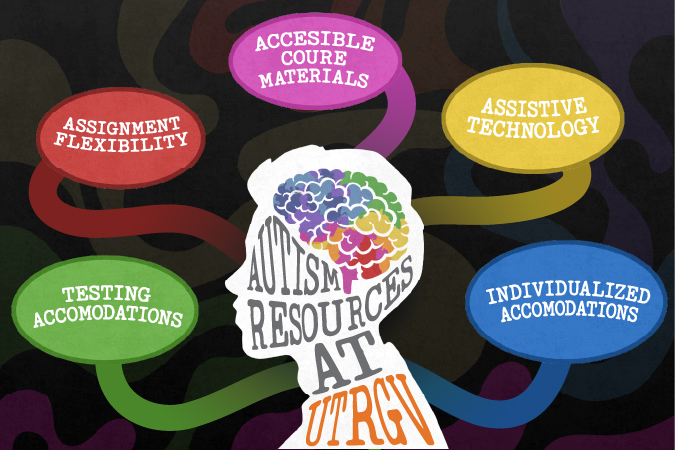
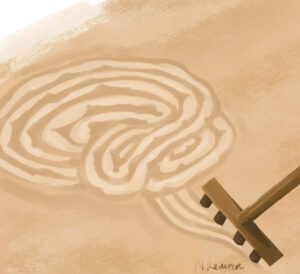
At UTRGV, one faculty member describes her experience with having autism and how it has influenced her in guiding and supporting autistic students through her peer support group.
Rebecca Monroe, UTRGV access coordinator for Student Accessibility Service (SAS), said how emotionally difficult it is to have autism herself and live in a world that is not designed for neurodivergent people.
“There’s a lot of stress for individuals on the spectrum when they work in a system that’s not really made for them, like a university system,” Monroe said.
She added neurodivergent is a term that is used to incorporate all the other diagnoses that have to do with different ways of thinking, including ADHD, autism and dyslexia.
Monroe said when she was an undergraduate student, there were no accommodations for her, which caused her to struggle. This resulted in her almost failing out of college.
“I had a really hard time and had to fight for my accommodations and that led me into wanting to be a special education teacher and…help students like me,” she said.
She said now she works with students and makes sure that both their academic and emotional needs are being taken care of.
Monroe said she discovered she had autism when she got her job at SAS, while doing a research project to start a peer support group for individuals with autism. As she was interviewing these students to see what support they needed, she identified with their needs and social situations.
“If all of these students have had a diagnosis of autism and I am finding myself identifying with them, I have always felt not like everyone else, maybe I am also on the autistic spectrum, and I sought a psychological evaluation,” she said.
Monroe said there are three levels in the autism spectrum. Level three is for people who cannot speak and would have someone with them to help with their daily needs. Level two consists of someone who needs moderate support; they might need communication devices to be able to communicate. Depending on the person, they might hold a job considering what their skills and needs are.
“I have level one autism, which means I mask well enough to be able to hold a job…because I am able to communicate a little better, I have independent friendships and relationships, but I do have support needs,” she said.
Monroe said she is more sensitive to sensory inputs. For instance, when in a big department meeting she would need to use her cancelling headphones.
“Even if everybody’s quiet I can hear the noise of the projector and wrestling with your backpack… I can’t pay attention to what’s going on,” she said.
Clothing also affects her concentration at work, “I try to prioritize my comfort while also looking professional because if I’m sitting in my chair and just thinking my shoes hurt…then I can’t do my job,” she said.
According to Monroe, feeling excitement and joy is different for autistic people because they feel the emotion more strongly than others.
“Autistic joy is one of the most beautiful things that anybody can experience because we love what we love so deeply,” she said.
Monroe said individuals with autism have Alexithymia, which means they have trouble detecting or reading their own emotions in a situation right away.
“We may not understand what you’ve just said, we may not understand how we feel, but you give us a little time by ourselves and we process it,” she said.
For the second year Monroe will hold a peer support group that focuses on autism. Formal diagnosis is not needed, if a student is curious then they are open to learn more about neurodivergent brains and connect with other students.
“A lot of people have negative ideas about labels and sometimes labels can be harmful, in my case getting that label was very relieving…I finally gave myself the grace to go, this is just who I am,” she said.
Student Accessibility Service (SAS) is open from 8 a.m. to 5 p.m. Monday to Friday and is located at BMSLC room 1.107 on the Brownsville campus and Edinburg campus at University Center room 108.
To learn more information regarding SAS, contact them at ability@utrgv.edu and at (956) 882-7374 in Brownsville and in Edinburg at (956) 665-7005.