
SERIES REVIEW: Gross, Insane and Human
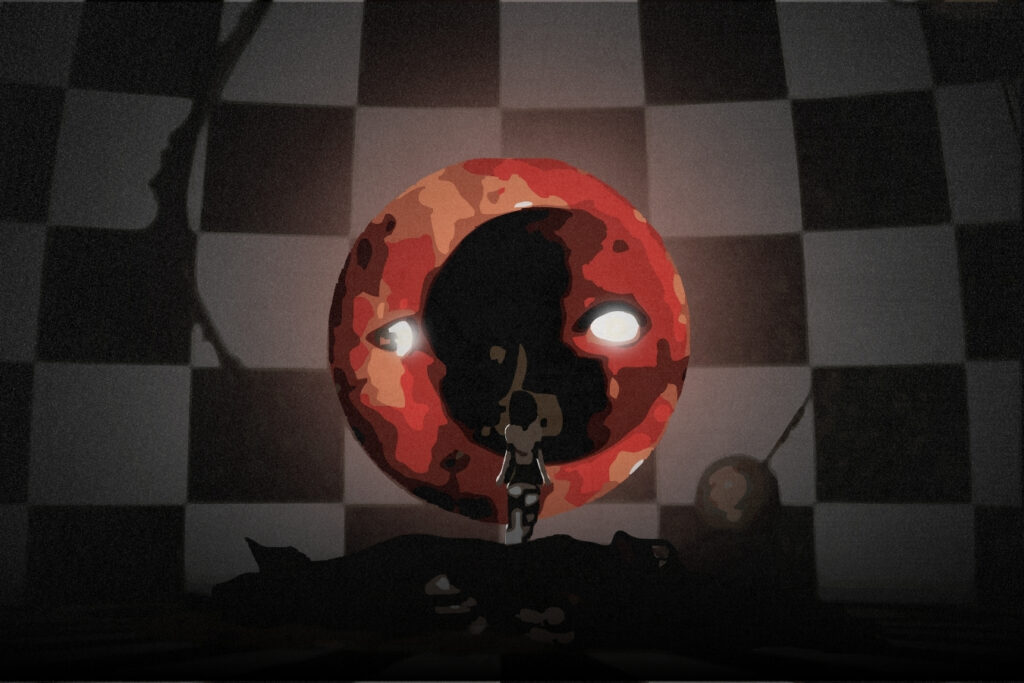
Malice@Doll is an insane abomination from 2001 that, underneath its grotesque nature, carries a surprisingly profound message about what it means to be human.
Its horribly outdated CGI somehow makes everything worse, creating an uncanny atmosphere that feels like you’ve stumbled upon something no sane person was ever supposed to watch.
The anime takes place in Organ, a deteriorating city inhabited by robots left behind after an unspecified catastrophe wiped out humanity. Despite their creators being long gone, the robots continue performing their programmed duties, slowly breaking down in a world that no longer needs them.
Among them is Malice, a Doll designed to satisfy human desires, who continues searching for clients despite humanity’s extinction.
Eventually, Malice encounters an alien-like entity that subjects her to a repulsive display of writhing obscenity.
After this horrifying encounter, she awakens as a human, finally capable of experiencing emotions, wonder, curiosity and physical sensation. She no longer needs oil to survive. For the first time, she can truly feel.
But dear Lord, does it get worse.
Malice begins spreading humanity almost like a disease, kissing the inhabitants of Organ in hopes that they, too, can experience her wonderful new existence. Some willingly accept her gift, while others are transformed against their will.
What follows is an increasingly grotesque spectacle of flesh, mutation and uncontrollable desire.
The series is genuinely difficult to watch. Its disturbing atmosphere never lets up, and the imagery only becomes more horrifying.
I could not sleep the night I watched it. I actually had to call a friend to calm myself down because I was so disturbed.
In trying to save Organ’s inhabitants from mechanical deterioration, Malice introduces them to biological decay. Machines that could survive as long as their components remained functional become living organisms vulnerable to injury, suffering and death.
The deaths of two characters make this especially apparent. Malice has not simply given them life. She has introduced mortality.
Organ becomes a nightmare of organic excess, populated by beings who can finally feel but are seemingly lonelier and more dissatisfied than ever.
I found it fascinating that only a select few characters develop humanoid appearances. Others become horrific mutated creatures that barely resemble humans.
It visually reinforces the story’s central contradiction: what Malice sees as a blessing becomes a curse. Becoming human does not necessarily mean becoming beautiful, fulfilled or better off.
As a robot, your existence is defined by your programming. You perform the duties you were designed for, rarely questioning their purpose. You continue fulfilling them until you can no longer function.
As humans, however, we have autonomy. We can pursue our desires, make decisions and indulge in our vices as much or as little as we choose. But that freedom comes at a cost.
We experience happiness, love and wonder, but also heartbreak, grief and the terrifying knowledge that everything we love will eventually disappear.
Humanity is not an inherently happy existence. We spend much of our lives searching for something that will make us feel complete. Sometimes, even getting exactly what we wanted isn’t enough.
Malice believes giving everyone the ability to feel will save them from their meaningless mechanical existence. Instead, she discovers that the very things making life worth living can also make it unbearable. She wanted to share something beautiful with a world falling apart, but in preventing one form of suffering, she created another.
Ultimately, she must confront whether the humanity she considered a gift was ever hers to give.
By all means, please do not watch this.
I cannot, in good conscience, recommend Malice@Doll unless you’re actively looking to be disturbed in ways you never thought possible. As someone who barely survived watching it, I can confidently say its imagery will haunt me for a very long time.
Yet beneath all the flesh, tentacles, mutations and absolute horrors, the series is still, after all, unexpectedly human.
A warning that being alive does not necessarily mean being happy, that freedom does not guarantee fulfillment, and that even the purest intentions can bring unimaginable suffering.