
Album review: Phoebe Bridgers’ ‘Lost Weekend’
After six years filled with side projects, breakups, and tragedy, Phoebe Bridgers released her third studio album, “Lost Weekend” on all streaming and physical formats on Aug. 14.
Her debut album “Stranger in the Alps” is a soft guitar album, filled with a sense of nostalgia. Her sophomore album “Punisher” was released in 2020. “Punisher” has more pop aspects but still keeps the mellowness of Stranger in the Alps.
The two albums before the new release were guitar-led with mellow slow pace singing, but each album has progressed, with “Punisher” adding pop elements, “Lost Weekend” seems to be a bit of both but still offers a new fleshed-out electronic and rock sound.
Before Bridgers announced the album, she started doing pop-up shows in cities that were famous for their “alien encounters,” such as Roswell, New Mexico, in May 2026. Audience members weren’t allowed to record, making her shows phone-free.
Then on June 5th, she announced that she would go on tour, The Lost Tour. Bridgers had not announced an album at that point, leaving fans speculating that she was planning something.
A few weeks later, she would announce “Lost Weekend.”
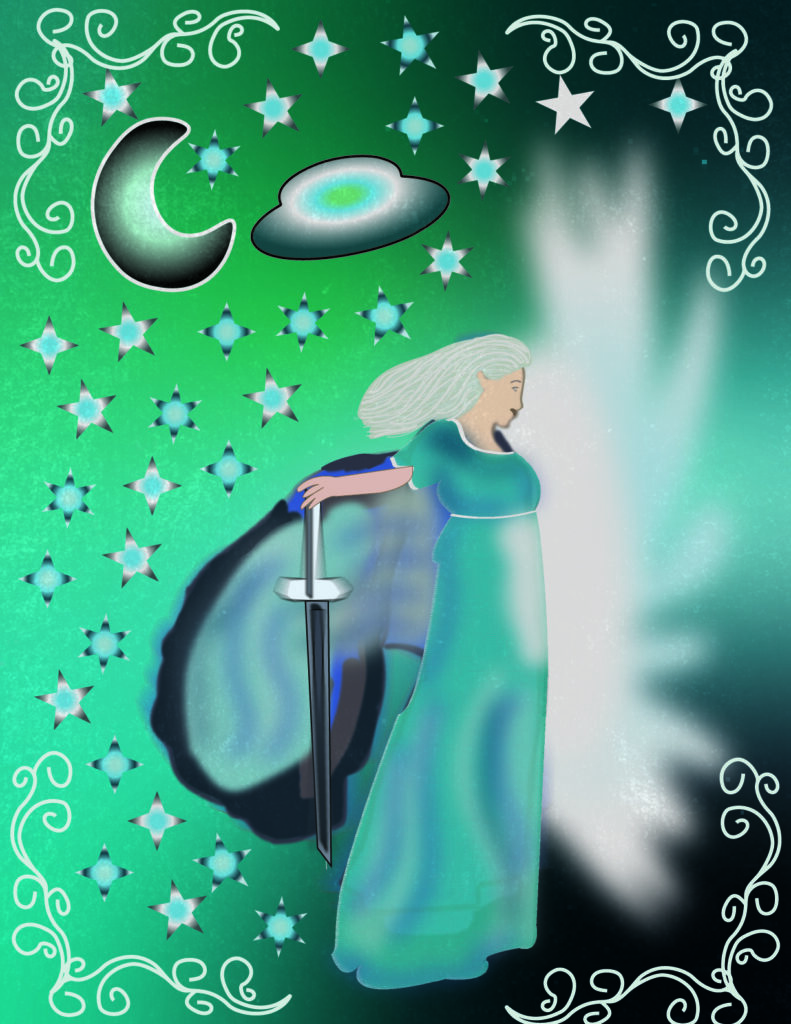
The album’s aesthetics, both visually and musically, have shifted in a more extraterrestrial way by using static and snippets of old TV infomercials. Most songs on the album have build-up before being cut off or interrupted by static, like a lost signal coming through.
I feel as though the album is separated into three sections: Grief, acceptance and moving forward.
The reasoning being it hits on different topics: the loss of her estranged father and relationship with Paul Mescal and the new love she’s found for comedian-musician Bo Burnham.
Grief
The first track, “The Outside,” introduces us back into Bridgers’ world, using a vocoder to make her voice more electronic–alien-like.
The song is about dissociation, with Bridgers singing, “But I was on the outside, watching/I am on the outside, watching.”
On track 11, “Never Going Back!” the last 30 seconds include a voicemail from her dad.
This is very heartbreaking because Bridgers has always been open about her complicated relationship with her dad.
Back in 2020 on her album “Punisher,’’ a song, “Kyoto” is about how she feels like an imposter and her relationship with her father.
Lyrics from “Kyoto” show that Bridgers’ father was trying to reconnect after many years.
“You called me from a payphone/They still got payphones/It cost a dollar a minute/To tell me you’re getting sober/And you wrote me a letter/But I don’t have to read it.”
“Never Going Back!” and “Kyoto” seem like sister songs in the concept they share and the way it’s presented with an upbeat sound. They both have a special place in my heart.
More notable songs that would fit into the grief category are “Still Standing,” a song about her father and his struggle of staying sober and the confusing feeling it brought her.
“Lost Weekend (reprise)” has lyrics about her father not coming back as a bird; when people lose loved ones, they look for them in objects, animals, etc. She is stating her belief that he won’t.
Acceptance
Track 3, “Kill Me,” fits into a place of both grief and acceptance. There is a lyric that seems like a callback to her album “Punisher.”
“Now all I know is the ending.”
This seems to refer to the last track on that album, “I Know The End,” which is about her acceptance of the end of her relationship with her drummer.
The lyric can be interpreted by the fact that her relationship with actor Paul Mescal is over and she is accepting it. At the end of the track, there is a harmonizing voice repeating “tamam shud,” which is a Persian phrase that means it is “finished or it is ended.”
Rumors of their relationship started in mid-2020, with Mescal doing a music video for Phoebe Bridgers’ song “Savior Complex.”
They later made their first appearance as a couple at the 2021 Met Gala, where a photo of Mescal holding Phoebe Bridgers but looking at actor Daisy Edgar-Jones caused an internet frenzy.
He also did backing vocals for Bridgers’ holiday rendition of “So Much Wine.” They later broke up in late 2022.
Two years later, Mescal is seen with musician Gracie Abrams. The public eye scrutinized Abrams because of her close relationship with Bridgers.
Fans of both had noticed that Bridgers and Abrams had the same bedsheets. When Gracie went on tour she replicated her childhood bedroom, which looks exactly like Bridgers’.
On track 4, titled “The Governor’s Waltz,” there is a line in which fans think Phoebe is addressing the issue
“And she can pretend to be me/Since she took my place in my bed on that stage/I have not lost any sleep.”
The last phrase seems to show that Bridgers’ has moved on from Mescal. “The Governor’s Waltz” is my personal favorite.
Moving Forward
Track 5, titled “Bobby,” which is a nickname she has given Bo Burnham, is about their relationship and how it feels too good to be true. It reminds me of a 2000s love song.
Track 14, “I Can’t Wait!,” is about missing your cue in life. It reminds me of the essay “The White Album” by Joan Didion. The feeling of being told your whole life to follow a script and then growing up and feeling as though you lost it, but Bridgers’ addition of “ it’s now or never,” turns it on a positive note. In the song, she’s not letting this feeling of being lost keep her in a state of waiting.
“I’m not good/but I’m better/missed my cue/ but whatever/ it’s now or never.”
Final Review
This album is by far Bridgers’ most complex album. Her craft keeps progressing. These 16 tracks present a nonlinear story of healing and grieving, just like real life. My favorite tracks are “The Governor’s Waltz,” “I can’t wait!,” and “Kill Me.”