
The Ghost in Our Hearts & Culture
The folktale of La Llorona has been retold for centuries in the Hispanic community. It is a story that gives goosebumps to individuals that sit down and bond with family and friends.
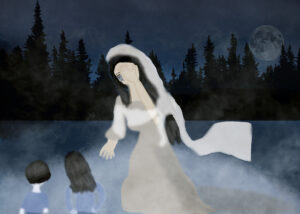
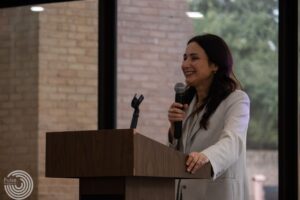
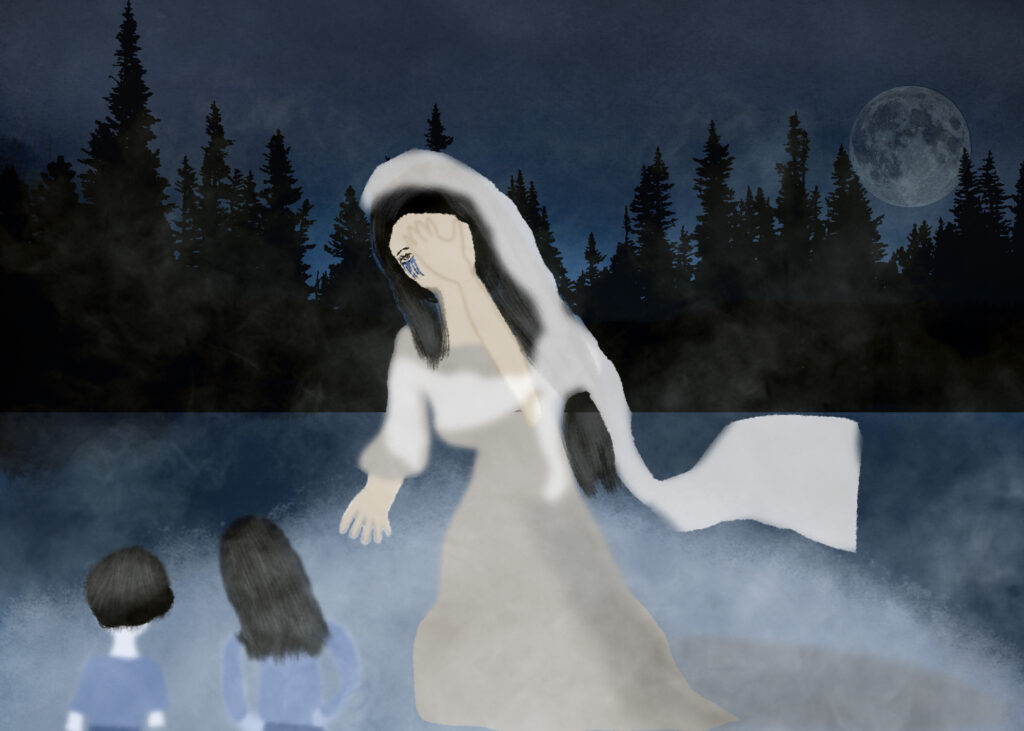
Sylvia Vera-Huesca, a writing and language studies professor, said the story of La Llorona begins with a lady and her partner, who leaves her and her children. With her sadness, she takes her children to a river and drowns them. After killing her kids, she becomes sad and devastated for what she did.
“Now she walks every night looking for her kids and crying out ‘Ay, mis hijos!’ (Oh, my children!),” she said..
Professor Huesca said the origins of La Llorona are everywhere, “I will tell you that it’s from Veracruz, from where I am from because that’s what I heard from my grandma, from my mom, from my family, but the more I do research and … talk to other people, they would tell me La Llorona is from everywhere.”
She said whether individuals speak Spanish or not, they can connect to the folklore“It brings you home, it brings you to your mom, it brings you to those things that you know as Hispanics,” Huesca said.
Marissa Vega, a biology sophomore, said the story of La Llorona makes her feel nostalgic because she remembers a time when she was younger and scared of hearing the story.
Vega said she feels connected to the folktale, “It’s so traditional; it reminds me of the evil eye, I feel connected.”
Professor Huesca said when she was 8 years old, she had an encounter with La Llorona.
While she was washing her hands in the river near her home, she looked around and saw a female figure.
“Maybe it was a dream, maybe I made this up as I was growing up, but I remember it vividly,” she said.
The professor had another encounter with her when she was in Querétaro, Mexico, researching the folktale.
As she fell asleep in her Airbnb, she heard the cries of La Llorona.
“Maybe it was that I was overwhelmed with the story and then my mind made the trick, but I don’t know, I remember that happened,” she said.
Vega said when her mom was younger she would hear the cries of La Llorona whenever someone was telling the story.
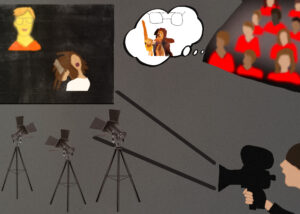
Professor Huesca was asked to write a movie script for a retelling of La Llorona based on the book “Stories That Must Not Die” by Juan Sauvagea. As she was doing research, she said what fascinated her about this story is that it is shared with more than one culture. La Llorona comes in different packages from different cultures, such as Japan, which has its own retelling of the story.
“I think it makes us a great culture when it comes to creating these folktales, but also creating this environment where families will stick together before bedtime to share stories with their kids,” she said.
Huesca added the story of La Llorona is connected to the Hispanic community because it involves the nostalgia of remembering when parents would discipline their kids, and the story became a tradition.
“La Llorona is one more story. We have so many amazing folktales that we should preserve and share,” she said.
Professor Huesca said it’s interesting when you sit down with a bunch of people and start sharing folktales, like La Llorona, and at least one person would have a story about encountering her.
“I’ve been sharing my movie for the past year in different panels and film festivals …when I ask the audience about the movie and about anything that they want to share … every single time I find someone that has a story about La Llorona,” she said.
For individuals who are not familiar with this folktale, Professor Huesca said to talk to family members because they might know the story.
“Try to get these stories from people that you know, not just because they will give you a great story, but also the connections that you’re going to create with them … and the memories they will share with you,” she said.
Professor Huesca’s movie La Llorona is out now and can be seen here.