
Keep the Big Bend in Texas
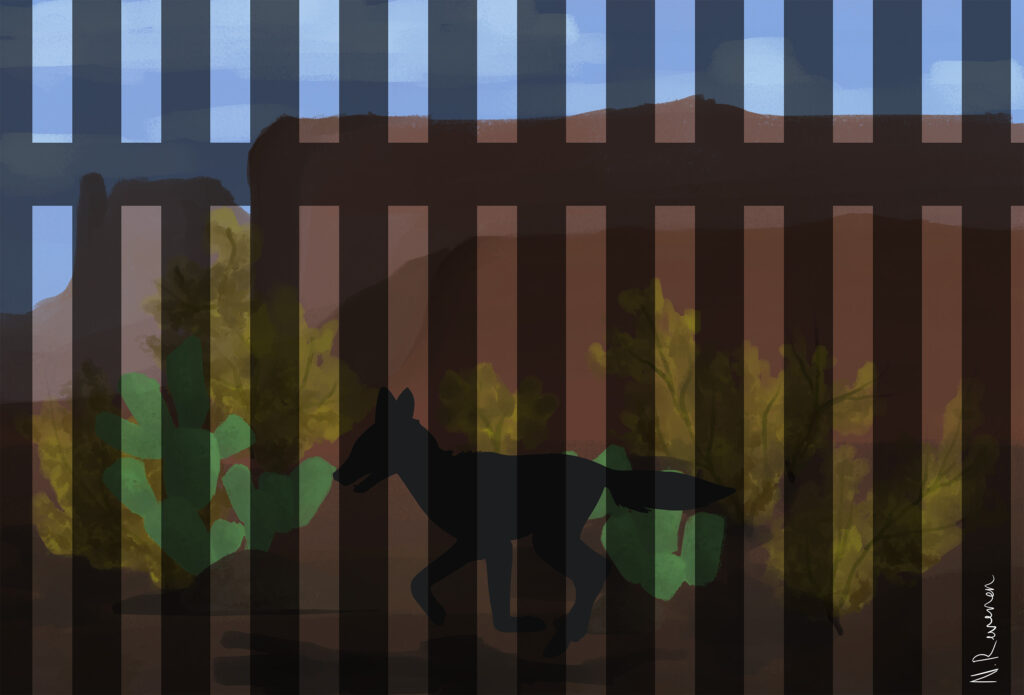
On the border between Texas and Mexico sits Big Bend National Park where the Department of Homeland Security is funding $1.7 billion to start construction on a border wall.
Construction of the border wall in the national park began in early August and is drawing concerns from environmental professors about the wall’s construction and its impact on the environment.
As of the publication of this story, there has been a temporary halt to the construction. This is because the Department of Homeland Security said the initial construction was just for survey work and not the actual construction of the wall. However the construction is set to start again on September 30, 2026.
Big Bend National Park is located in Brewster county and is home to over 450 birds, 75 mammals, 56 reptiles, and 11 amphibians.
Sylvia Quintero, UTRGV lab supervisor coordinator for the School of Integrative and Biological Chemical Sciences said the loud noises from the construction of the wall will scare the animals away.
“Once it is constructed, nature finds a way,” Quintero said.
The construction prompted environmentalists to protest after reports of damage along the Santa Elena Canyon and Mariscal Canyon, which are major tourism locations. There has also been footage shown of animals fleeing due to heavy machinery in their natural habitat.
UTRGV biology lecturer Viviana Trevino said “all of the digging to construct these new roads … is not only going to disrupt the plants that are in the area but all the wildlife that depends on it in those areas, are going to be displaced.”
Trevino added the proposed construction poses a major concern for light pollution as Big Bend National Park is an area known for stargazing.
“Big Bend is an area far away from other populations and should be dark … where migration happens so we need it to be dark for animals that migrate especially at night,” Trevino said.
UTRGV biology professor Alejandro Fierro said the process of fragmentation, which is when a large habitat is divided into two different areas after roads are put in place, is a main concern for environmentalists. This is because it can disturb the natural ecosystem for the wildlife.
This has motivated multiple environmental groups around Texas to call for the permanent stop of the construction and preserve the natural resources of Big Bend National Park.
“Big Bend is an open space where animals and wildlife are able to grow and roam freely. Putting a giant barrier along the middle of it limits it,” Trevino said.
The opposition of the construction through the park has led to public backlash and a standstill in the construction. Texas residents are now coming together to fight against the construction and are trying to sue the government over the destruction to the natural ecosystem and wildlife habits.
As of the publication of this story, there is no current end date of the construction due to the ongoing legal disputes between the landowners and the U.S. government.